


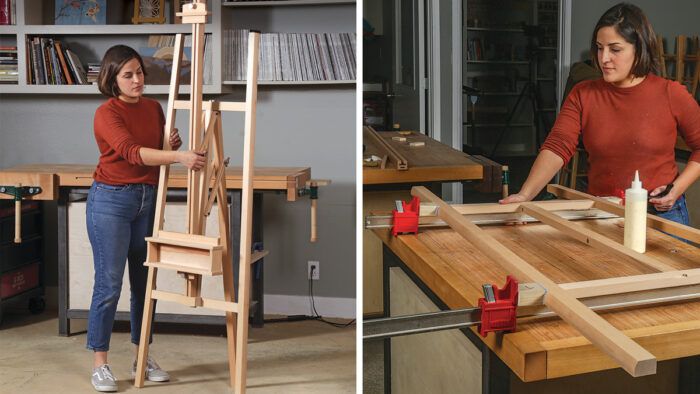
Hey there, art lovers! Ever dreamt of having a sturdy, beautiful easel to showcase your masterpieces? Well, ditch those wobbly, store-bought ones and get ready to build your own! This DIY project isn't just about saving money, it's about putting your heart and soul into creating something that reflects your artistic spirit.
Gathering Your Supplies:
First things first, let's talk about what you'll need. Head to your local lumberyard and grab the following materials:
Wood: 1x2" pine boards (for the legs and stretcher bars), 1x4" pine board (for the top frame), 1/2" plywood (for the canvas support), and some scrap wood for bracing. Choose quality wood for longevity and stability.
Hardware: Wood screws (2" and 1 1/2"), wood glue, hinges, and a small piece of felt for the canvas support.
Tools: Saw (circular or hand saw), drill, screwdriver, sandpaper, measuring tape, pencil, level, and a clamp (optional).
Planning Your Masterpiece (Easel, that is):
Now, let's sketch out a plan. There are tons of easel designs out there, from simple A-frames to more elaborate adjustable models. For this project, we'll build a basic A-frame easel. This is a great starter design and can be easily adapted.
The Blueprint:
1. Legs: Decide on the height of your easel. You can adjust this based on your preference. Cut two 1x2" boards to the desired height. These are your legs.
2. Top Frame: Cut two 1x4" boards for the top frame, and measure them to be slightly wider than your canvas. Cut a third 1x4" board to fit the width of the frame, creating a rectangular shape.
3. Canvas Support: Cut a piece of plywood to be the same width as your top frame. The length should allow for a comfortable angle to display your canvas.
4. Stretchers: Cut four 1x2" boards to create two stretcher bars. The length should be slightly less than the width of the canvas.
5. Brace: Cut a short piece of scrap wood to use as a brace for the legs.
Building the Framework:
Okay, now for the fun part â€" building the actual easel!
1. Joining the Legs: Use wood glue and screws to connect the two legs at the bottom, forming an A-shape. Make sure the legs are parallel and stable.
2. Adding the Top Frame: Attach the two longer top frame boards to the top of the legs using screws and glue. The top frame should be positioned so it sits flush with the tops of the legs.
3. Completing the Top Frame: Secure the third top frame board to the other two boards to complete the rectangular shape.
4. Strengthening the Easel: Attach the brace to the inside of the legs to add stability. Position it about halfway up the legs for maximum support.
Assembling the Canvas Support:
1. Attaching the Canvas Support: Position the plywood canvas support onto the top frame. Make sure it's centered and level. Secure it to the frame using screws and glue.
2. Adding a Felt Pad: Stick a piece of felt onto the underside of the canvas support. This will protect your canvases and prevent slipping.
Finishing Touches:
Your easel is taking shape! Now it's time to add some finishing touches.
1. Sanding: Smooth out any rough edges or splinters on your easel with sandpaper. This will create a clean and polished look.
2. Painting or Staining: Personalize your easel by adding a coat of paint or stain. Choose colors that complement your art style or create a unique statement.
3. Adding the Stretchers: Use hinges to attach the stretcher bars to the back of the canvas support. These will help hold your canvases in place.
Stand Back and Admire Your Creation:
You've done it! You've built a beautiful and functional wooden easel. Now, proudly display your art and enjoy the satisfaction of creating something with your own two hands.
Pro Tips:
Choose wood wisely: Consider the weight of your canvases when choosing wood. If you plan on displaying large, heavy paintings, opt for stronger wood like oak or maple.
Pre-drill holes: Before screwing into the wood, use a drill to create pilot holes. This will prevent the wood from splitting.
Use clamps: For added stability, use clamps while assembling the frame.
Don't forget safety: Always wear safety glasses when using power tools and use appropriate tools for each task.
Beyond the Basic:
Feeling ambitious? Want to take your easel building to the next level? Try adding these features:
Adjustable Angle: Incorporate adjustable legs or a tilting mechanism to create different angles for your canvases.
Storage: Build shelves or drawers into your easel to store brushes, paints, and other supplies.
Wheels: Add wheels for easy movement around your studio or home.
Now, go out there and create your own masterpiece! Building a wooden easel is not just about creating a functional piece, it's about the journey of creation, the satisfaction of seeing your project come to life, and the pride of displaying your art with a unique piece you built yourself.


0 comments:
Post a Comment
Note: Only a member of this blog may post a comment.